
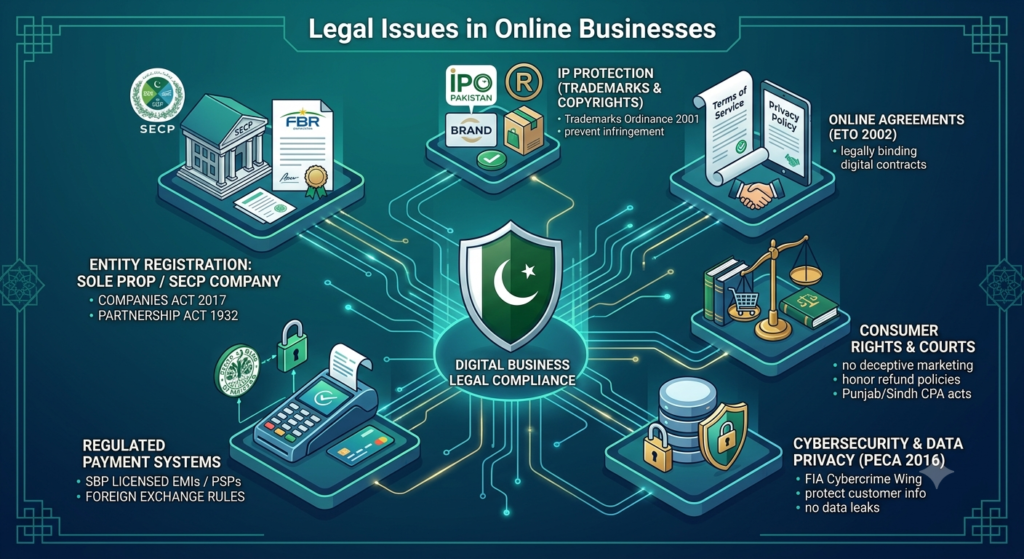
Starting an online business in Pakistan brings immense commercial opportunities. However, running an e-commerce store or digital service without proper legal setup creates serious financial and legal risks. Many online sellers operate without knowing that federal and provincial laws apply directly to digital sales.
Understanding these regulations helps you protect your brand, avoid heavy fines from tax authorities, and build trust with your customers. This straightforward guide breaks down the essential legal requirements for running a compliant online business in Pakistan.
1. Choosing the Right Business Structure
Operating an unregistered store leaves your personal bank accounts and personal assets exposed to business liabilities. You must register your enterprise under one of three main legal forms:
- Sole Proprietorship: This simple structure suits individual sellers. You register directly with the Federal Board of Revenue (FBR) by obtaining a National Tax Number (NTN).
- Partnership Firm: If you run the store with co-founders, you register a formal Partnership Deed under the Partnership Act, 1932 with your local Registrar of Firms.
- Private Limited Company (SMC-Pvt Ltd or Pvt Ltd): You register this entity through the Securities and Exchange Commission of Pakistan (SECP) under the Companies Act, 2017. Corporate registration separates your personal assets from business debts and helps you secure bank payment gateways much faster.
2. Digital Contracts and Customer Terms
Your website needs legally sound policies because digital agreements carry full legal authority in Pakistani courts under the Electronic Transactions Ordinance (ETO), 2002.
Every online shop must display clear, accessible policies:
- Terms and Conditions: This agreement forms a binding contract between you and the buyer. State your order fulfillment rules, delivery timelines, and liability limits clearly.
- Privacy Policy: Inform customers exactly how you collect, store, and use their personal contact information and browsing data.
3. Following Consumer Protection Laws
Pakistani consumer courts actively hear complaints against digital sellers. Provincial laws, including the Punjab Consumer Protection Act, 2005 and the Sindh Consumer Protection Act, 2014, safeguard digital shoppers.
To prevent legal disputes, follow these operational rules:
- Avoid Deceptive Advertising: The Competition Act, 2010 bans misleading price displays, fake customer reviews, and false quality claims.
- Honor Return & Refund Policies: If you send a defective or incorrect item, consumer courts can force you to pay damages and issue full refunds.
- Publish Contact Information: Always display an active business phone number, physical address, and official support email on your website.
4. Protecting Customer Data and Cybersecurity
Online stores store sensitive information like names, delivery addresses, and payment records. You must protect this data against leaks under the Prevention of Electronic Crimes Act (PECA), 2016.
- Data Privacy: Selling or sharing customer data without explicit consent is a criminal offense under PECA 2016.
- Fraud Prevention: Secure your website infrastructure with SSL certificates and modern firewalls. Negligent security that leads to customer data breaches can trigger formal investigations by the FIA Cybercrime Wing.
5. Integrating Payment Gateways Responsibly
To accept credit cards or digital wallet payments online, you must comply with State Bank of Pakistan (SBP) rules:
- Use SBP-Licensed Gateways: Integrate payment solutions only from authorized Payment Service Providers and Electronic Money Institutions regulated under the Payment Systems and Electronic Fund Transfers Act, 2007.
- Follow Foreign Exchange Rules: If you sell products to overseas clients or export software services, follow SBP directives regarding international payment remittances and foreign currency accounts.
6. Protecting Your Brand Identity
Do not build a brand without securing your intellectual property rights first.
- Register Your Trademarks: File your brand name, logo, and slogan with the Intellectual Property Organization (IPO) Pakistan under the Trademarks Ordinance, 2001.
- Respect Copyrights: Never use copyrighted product photos, supplier graphics, or stolen marketing text without written consent. Selling counterfeit goods or using someone else’s brand name leads to immediate domain takedowns and court actions.
7. Meeting Tax Regulations
The FBR and provincial revenue agencies actively monitor digital commercial transactions across Pakistan.
Keep your tax records clean by following these steps:
- Income Tax: Obtain your NTN and file annual income tax returns reporting your e-commerce profits.
- Sales Tax Registration: Register for Sales Tax (STRN) with the FBR if you sell physical goods above threshold limits.
- Provincial Service Taxes: If you sell software, online courses, or digital services, pay provincial sales tax to regional bodies like the Sindh Revenue Board (SRB) or Punjab Revenue Authority (PRA).
- Issue Proper Invoices: Provide digital receipts for every sale and keep organized transaction records for auditing purposes.
Quick Compliance Checklist
- Register your business entity (Sole Proprietorship or SECP Company).
- Get your NTN and STRN from the FBR.
- Add clear Terms of Service, Privacy Policy, and Refund Policy links to your website footer.
- Protect your brand name with IPO Pakistan trademark registration.
- Secure your site with HTTPS and partner with SBP-approved payment processors.