
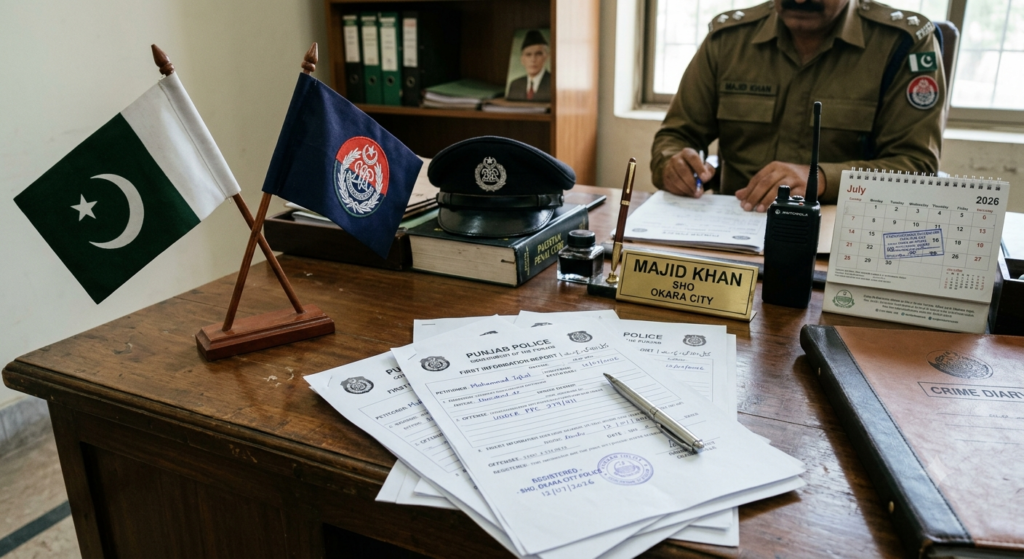
Filing an FIR in Pakistan is the crucial first step toward initiating a formal criminal investigation. When a crime occurs, citizens often feel confused about where to go, what to say, and how to protect their rights. Knowing your statutory rights makes the legal process much smoother, safer, and more effective. This comprehensive guide breaks down the exact steps to register a First Information Report, your legal remedies if officers resist, and how to avoid common procedural mistakes.
Understand What an FIR Really Is
An FIR stands for First Information Report. It is an official written document prepared by the police after receiving information about a cognizable offense.
Under the Criminal Procedure Code (CrPC) of 1898, crimes fall into two broad legal categories:
- Cognizable Offenses: Serious crimes such as theft, robbery, assault, kidnapping, or murder. For these offenses, police officers have the legal authority to register an FIR, initiate an immediate investigation, and arrest suspects without needing a prior warrant from a magistrate.
- Non-Cognizable Offenses: Minor offenses such as simple verbal threats or minor disputes. Police officers cannot register an FIR or arrest suspects directly for these; instead, they record the details in a daily station diary (Rojnamcha) and direct the complainant to approach a magistrate.
Because an FIR sets the entire state machinery into motion, it acts as the cornerstone of the criminal justice process in Pakistan.
Information Required Before Visiting the Station
Before walking into a police station, organizing your thoughts and facts is vital. A well-structured statement ensures the police record your grievance accurately without leaving loopholes that defense lawyers could exploit later.
Make sure you have the following details clearly noted:
- Date, Time, and Location: The exact or approximate time and specific place where the incident occurred.
- Details of the Offender(s): Names, descriptions, or identifying features of the accused (if known). If the culprits are unidentified, note their physical traits, clothing, height, or vehicles used.
- Sequence of Events: A chronological narrative detailing exactly what transpired before, during, and after the crime.
- Witness Information: Names and contact details of any eyewitnesses who observed the event.
- Evidence: Physical or digital proof, such as medical reports (in assault cases), stolen item receipts, photos, or video footage.
Step-by-Step FIR Registration Procedure
Filing an FIR follows a standard legal sequence defined by Section 154 of the CrPC. Here is what you must do at the police station:
Step A: Visit the Concerned Police Station
Go directly to the police station that holds territorial jurisdiction over the area where the crime took place. While emergency reports can be taken elsewhere, the primary investigation always belongs to the local precinct.
Step B: Provide Your Statement
Inform the Station House Officer (SHO) or the duty officer about the incident. You can present your complaint in two ways:
- Written Application: Hand over a written and signed application detailing the incident.
- Verbal Statement: Tell the officer what happened. Under Section 154 CrPC, the officer is legally required to reduce your verbal statement into writing.
Step C: Verification and Reading Back
Once the officer writes down the statement, they must read it back to you aloud. Listen carefully to every word. Ensure that no key facts were altered, omitted, or added.
Step D: Signing and Official Entry
After confirming that the statement is accurate, sign the document or apply your thumb impression. The police officer will then transcribe the information into the official FIR register (Form 24.5 of the Police Rules).
Step E: Obtain Your Free Copy
By law, the police officer must give you an official, stamped copy of the registered FIR immediately. You do not need to pay any fee for this copy. Never leave the station without your official copy, as it contains your unique FIR number necessary for tracking the investigation.
What to Do If the Police Refuse to Register Your FIR
In practice, citizens sometimes encounter uncooperative police officers who refuse to register an FIR due to political pressure, bribery, or an attempt to minimize reported crime statistics in their precinct. If an SHO refuses to record your complaint, you have clear legal remedies:
Remedy 1: Escalation to Senior Police Leadership
Submit a written complaint containing the facts of the crime alongside the SHO’s refusal to senior officers, such as the Superintendent of Police (SP), District Police Officer (DPO), or City Police Officer (CPO). Senior officers possess statutory power to order the SHO to register the FIR immediately or assign the case to another officer.
Remedy 2: Approaching the Justice of Peace (Section 22-A / 22-B CrPC)
If senior officers fail to act, your most effective legal remedy is filing an application under Section 22-A(6) of the CrPC before the Sessions Judge (who acts as the Justice of Peace).
- Your lawyer will present the facts and demonstrate that a cognizable offense occurred.
- The judge will issue a notice to the police station for a comment.
- Upon reviewing the facts, the court can issue a direct judicial order commanding the police to register the FIR without further delay.
Remedy 3: Utilizing Digital Police Portals & Helplines
Modern policing in Pakistan offers digital avenues to lodge complaints against non-cooperative stations. You can register formal grievances through provincial police helplines (such as 15 or 8787 in Punjab), official provincial police apps, or the Prime Minister’s Performance Delivery Unit (PMDU) portal.
5. Critical Precautions and Best Practices
To ensure your safety and the integrity of your legal case, keep these essential precautions in mind:
- Avoid Unreasonable Delay: Report the crime as quickly as possible. Unexplained delays in filing an FIR often create suspicion in court regarding the authenticity of the claim.
- Never Exaggerate or Provide False Statements: Stick strictly to verified facts. Fabricating names, overstating damages, or making false claims is a punishable offense under Section 182 of the Pakistan Penal Code (PPC).
- Keep Backup Documentation: Maintain copies of your written application, dispatch receipts from senior police offices, and any medical certificates (Mendico-Legal Certificates) safely.