
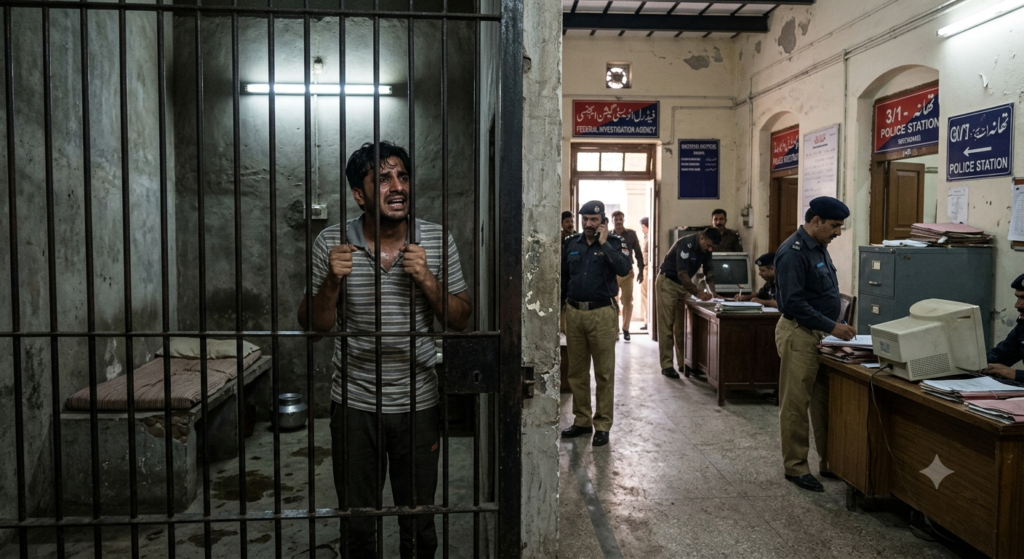
An unexpected encounter with law enforcement can shock anyone. Most citizens panic during an arrest simply because they do not understand how Pakistani law protects them. Police officers often rely on this lack of legal awareness to intimidate suspects, conduct illegal detentions, or force quick settlements.
The Constitution of Pakistan and the Code of Criminal Procedure explicitly grant you powerful legal protections from the moment an officer stops you. Understanding these rights will help you keep yourself safe, prevent police abuse, and protect your freedom.
Your Constitutional Rights During an Arrest
The Constitution of Pakistan places strict boundaries on police power. The moment a police officer restricts your movement, several fundamental rights activate immediately to protect your life and liberty.
First, Article 10(1) forces the arresting officer to state the exact reasons for your arrest right away. Police cannot lawfully grab you, toss you into a police van, and lock you up without explaining the crime you allegedly committed. If an officer refuses to state the grounds of arrest, they are breaking constitutional law.
Second, the same constitutional article guarantees your right to consult and retain a defense lawyer of your choice. Police officers cannot legally ban your advocate from visiting you, speaking with you privately, or attending your court hearings. You should immediately state that you want your lawyer present before you give any formal statements.
Third, Article 10(2) sets a strict 24-hour clock on police detention. Police officers possess zero legal authority to hold you in a police station lockup for more than 24 hours on their own whim. They must produce you in person before the nearest Judicial Magistrate within 24 hours of your arrest. The police cannot count travel time toward this limit, but they cannot delay the presentation without valid cause. If police hold you past 24 hours without taking you to a judge, their detention turns into illegal confinement, opening them up to serious legal consequences.
Finally, Article 14 guarantees the absolute inviolability of human dignity. This article explicitly bans physical torture, mental harassment, verbal abuse, or severe beatings inside police stations. Police officers hold the legal authority to detain suspects for investigation, but they possess absolutely no legal authority to inflict pain or force confessions through violence.
Mandatory Police Procedures During an Arrest
Pakistani criminal law lays down clear procedural rules that law enforcement officers must follow on the ground. When officers ignore these steps, they destroy their own case in court and give your lawyer strong grounds to challenge the prosecution.
Every arresting officer must clearly identify themselves by name, rank, and police station before taking you into custody. If plainclothes officers stop you, demand to see their official police identity cards before cooperating.
If police officers seize any of your personal belongings—such as your smartphone, wallet, cash, car keys, or wristwatches—they must draft an official written inventory list called a Recovery Memo (Fard-e-Mukaishfa) right on the spot. The officer must sign this recovery list and hand an exact copy to you or an independent witness. This step prevents rogue officers from stealing your cash or planting fake evidence against you later.
The law also mandates strict procedural safeguards to protect female citizens from harassment and abuse. A female suspect must strictly be arrested by or in the presence of a female police officer. If the police need to conduct a physical search of a female suspect, only a female officer can carry out the search, and she must do so with complete privacy and decency. Furthermore, police stations cannot hold female suspects overnight in standard police station lockups (Hawalat). Officers must transfer female suspects to designated female police stations or release them under specific judicial orders.
Understanding Police Remand Versus Judicial Custody
When the police present you before a Judicial Magistrate within 24 hours, the court determines your physical location and custody status moving forward. Knowing the difference between police remand and judicial custody helps your family take immediate legal steps.
If police investigators need additional time to recover stolen property, collect physical evidence, or question you further, they must file a formal application for Physical Remand under Section 167 of the Code of Criminal Procedure. The Magistrate evaluates whether the police actually require your physical presence at the station. Magistrates grant physical remand in short chunks—usually two to three days at a time. The law caps total physical remand at a maximum of 14 days.
Once physical remand ends—or if the Magistrate rejects the police request—the court transfers you to Judicial Custody. This means police officers must hand you over to a regular Central or District Jail. Once you enter judicial custody, police interrogation stops entirely, and your lawyer can immediately file a formal bail application in court to secure your release.
If police officers beat you, threaten you, or deny you medical care during physical remand, report this abuse directly to the Magistrate during your court appearance. Your lawyer can request an immediate court order for a formal medical checkup by a government Medico-Legal Officer. The official medical report becomes crucial evidence in court to prove police torture and invalidate forced confessions.
How Bail Works in the Pakistani Legal System
Bail allows an accused individual to secure temporary release from jail while their criminal trial proceeds. The ease of getting bail depends heavily on how Pakistani law categorizes the alleged offense.
In bailable offenses—which include minor fights, traffic incidents, or simple property disputes—getting bail is your absolute legal right under Section 496 of the Code of Criminal Procedure. The Magistrate or police station officer must release you as soon as you submit valid bail bonds (financial guarantees).
In non-bailable offenses—which involve serious crimes like robbery, major fraud, or violent acts carrying three or more years in prison—bail is not automatic. Your lawyer must present solid arguments in court to show that the police lack strong evidence against you or that special circumstances warrant your release.
Immediate Practical Steps to Take During an Arrest
If police officers arrest you or a family member, follow these practical steps to protect your legal position:
Stay calm and never physically resist arrest. Running away or fighting police officers gives them a quick excuse to register additional criminal charges against you for obstructing a public servant.
Assert your right to legal counsel clearly and repeatedly. Inform the investigating officer that you will refrain from answering detailed questions until you speak directly with your advocate.
Never sign blank sheets of paper or written statements that you did not read carefully. Police officers sometimes try to trick suspects into signing blank documents to write fake confessions later. Under Section 162 of the Code of Criminal Procedure, statements you give to police officers during an investigation carry no weight as direct confession evidence in court unless you confirm them voluntarily before a judge.
Demand your right to call a family member or friend so they know exactly which police station holds you.
If police officers secretly detain your family member, hide their location, and refuse to present them before a Magistrate within 24 hours, take legal action immediately. Your lawyer can file an urgent court petition known as a Habeas Corpus Petition under Section 491 of the Code of Criminal Procedure in the High Court. The High Court will dispatch an official court bailiff to raid the police station, locate your family member, and bring them directly before the judge for immediate release.