
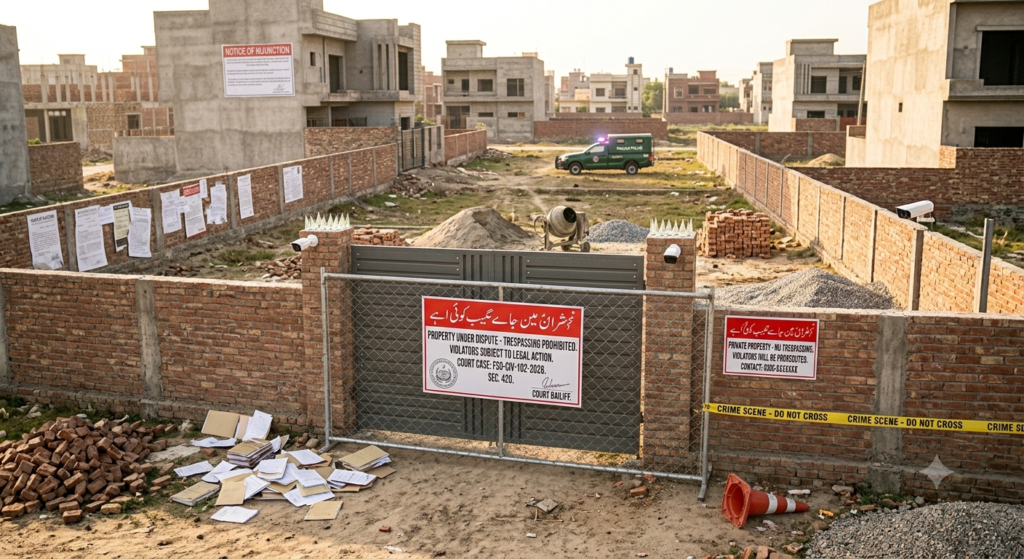
For many Pakistanis abroad, the biggest legal worry at home is property: a house occupied by a relative, a plot transferred with a fake power of attorney, or inherited land that brothers will not divide. This guide explains the most common property disputes faced by overseas Pakistanis and the legal options available, without needing to fly back for every hearing.
The most common property problems
| Problem | Main legal options |
|---|---|
| Relative or stranger occupying your property | Illegal Dispossession Act complaint; civil suit for possession |
| Property transferred using a forged document or fake power of attorney | Civil suit for cancellation and declaration; criminal complaint for forgery |
| Heirs refusing to divide inherited property | Partition suit; inheritance mutation |
| Tenant not paying rent or not vacating | Eviction petition before the Rent Tribunal or Rent Controller |
| Builder or housing society fraud | Civil suit, complaint to the regulator, criminal complaint for fraud |
Living abroad? We recover property from illegal occupation, fake transfers and inheritance disputes while you stay overseas. See property recovery for overseas Pakistanis.
1. Illegal occupation of your property
The Illegal Dispossession Act, 2005 protects owners and lawful occupiers against people who take possession without legal right. A complaint is filed directly in the Sessions Court, which can order the property to be returned and punish the occupier. Where the occupier claims a right, for example as a co-heir or tenant, a civil suit for possession may be the better route. Read more in protecting your property from illegal occupation.
2. Fake transfers and forged documents
Overseas owners are frequent targets of fraud because they are not there to notice. If your property has been transferred on a forged sale deed or a fake power of attorney:
- Get a copy of the transfer record from the land record office or the housing society.
- File a civil suit to cancel the forged document and declare your ownership, and ask the court to stop any further sale.
- File a criminal complaint for forgery and fraud against those involved.
- Inform the registrar or society in writing so the property is flagged.
3. Inherited property that heirs will not divide
When one heir controls family property and refuses to share it, the others can file a suit for partition. First the inheritance mutation should record each heir’s share. See how to transfer property after death and women’s inheritance rights, since sisters and daughters are often left out.
4. Tenants who will not pay or leave
Rented property is governed by provincial rent laws, such as the Punjab Rented Premises Act, 2009. An owner can file an eviction petition for non-payment of rent or other grounds. A written, properly registered tenancy agreement makes this much easier.
5. Overseas Pakistanis Commission and special forums
In Punjab, the Overseas Pakistanis Commission accepts complaints from Pakistanis abroad, including about property, and can follow them up with government departments. Punjab has also made special laws for property disputes of overseas Pakistanis; see our article on the Overseas Pakistani Property Protection Act. These routes can run alongside a court case, not instead of it.
How to run a property case from abroad
- Send copies of your title documents and the facts to your lawyer.
- Sign a special power of attorney for this case at the Pakistani embassy or consulate. Our power of attorney guide for overseas Pakistanis explains how.
- Your lawyer checks the land record, files the case and attends hearings.
- You get updates after every hearing and copies of orders.
How to protect your property while you live abroad
- Keep certified copies of the sale deed, fard or allotment letter and the mutation.
- Check the land or society record at least once a year.
- Give special powers of attorney for specific tasks, not wide general ones.
- Cancel old powers of attorney you no longer need, and inform the registrar.
- Put tenancies in writing and collect rent through the bank.
- Do not hand original documents to relatives or dealers.
Frequently asked questions
Can I file a property case in Pakistan while living abroad?
Yes. You sign a special power of attorney at the Pakistani embassy or consulate where you live, and your advocate files and runs the case in Pakistan. You usually only need to appear if the court specifically asks for you.
A relative is living in my house and refuses to leave. What can I do?
You can file a complaint under the Illegal Dispossession Act, 2005, or a civil suit for possession, depending on how the relative came into the property. A lawyer will advise which route fits your facts.
Someone transferred my property using a fake power of attorney. Is it reversible?
Yes, a transfer based on a forged document can be challenged. You can file a civil suit to cancel the document and declare your ownership, along with a criminal complaint for forgery.
Where can overseas Pakistanis complain about property problems?
In Punjab, the Overseas Pakistanis Commission accepts complaints from Pakistanis abroad. Courts remain the main route for disputes, and a complaint to the Commission can run alongside a court case.
How can I protect my property while I live abroad?
Keep copies of all title documents, check the land record regularly, give only special (not general) powers of attorney, cancel old powers of attorney you no longer need, and have tenancies in writing.
Talk to a property lawyer
We handle property cases for overseas Pakistanis across Pakistan, including in Lahore, Islamabad, Rawalpindi, Faisalabad, Gujrat and Karachi. See our services for overseas Pakistanis, or message us on WhatsApp at +92 334 7961863 for a free consultation.